
| by Admin
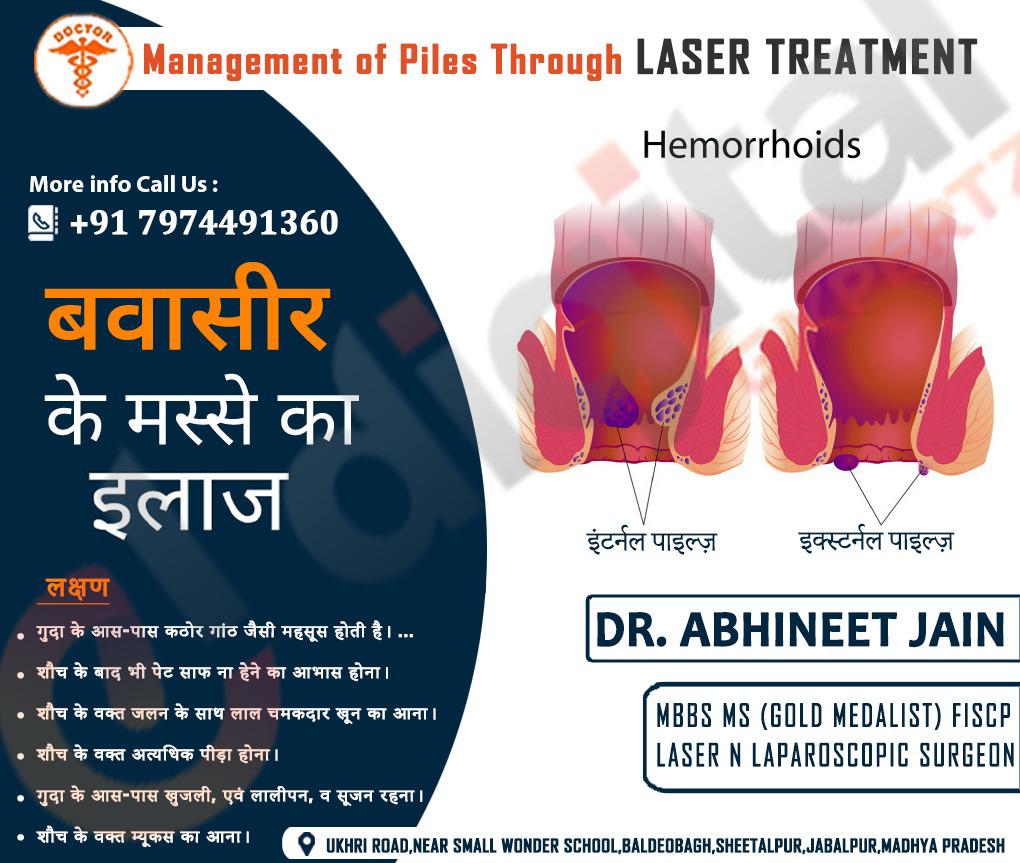
Laser piles surgery is performed under local anesthesia by a specialized team of anesthetists, laser proctology surgeons, and other medical staff. The following steps are carried out during the procedure:
Laser piles surgery is performed under local anaesthesia by a specialized team of anaesthetists, laser proctology surgeons, and other medical staff. The following steps are carried out during the procedure:
The surgeon will administer spinal, local (e.g., lidocaine and prilocaine) or general anaesthesia before the surgery. Spinal and local anaesthetic methods will numb the anal region and keep the patient conscious throughout the surgery.
The patient will be asked to be in a lithotomy position for laser surgery.
- The surgeon will first insert a tube called a proctoscope inside the anus. This tube contains a Doppler probe to locate the end of the blood vessels that supply the blood to the Haemorrhoids (terminal arteries).
- The surgeon will rotate the proctoscope clockwise to find the terminal artery. If we imagine the anus as a clock, piles are present at three, seven, and 11 o’clock (a person may not necessarily have piles in all three positions).
- The lowermost portion of the anus, close to the skin, is pain-sensitive. Hence, the surgeon will not make any cuts in this region.
- The region which is four cm inside the anal opening is pain-insensitive. Hence, the surgeon will perform surgery in this region. However, the patient might feel a stretch sensation post-surgery, making him or her uncomfortable.
- After the surgeon identifies the artery, they will insert a laser fibre into the anus via the same tube. The surgeon will then apply laser shots to destroy these arteries.
- The surgeon will use a 1470 nm diode laser to remove haemorrhoids.